
Key Highlights
- Ghosting usually comes from movement during pressing or peeling
- Heat press alignment and pressure consistency are critical
- Correct timing prevents double image effects
- Proper settings reduce transfer shifting
- Simple workflow fixes stop ghosting permanently
Few printing problems are as frustrating as seeing a clean design turn into a blurry double image after pressing. Ghosting in DTF transfers can make even experienced printers question their setup, materials, or technique.
This issue often appears suddenly, even when everything seemed correct during printing. One moment your transfer looks perfect, and the next, it shifts just enough to ruin the final result. Understanding why ghosting happens is the first step toward preventing it.
This guide breaks down the real causes behind ghosting, explains how to fix it, and shows how small workflow changes can completely eliminate the problem.
What Is Ghosting in DTF Printing?
The ghost effect in DTF printing appears when a design shifts slightly during heat pressing or peeling. This creates a faint duplicate outline that ruins sharp edges and text clarity.
Unlike color fading or peeling, ghosting is a physical movement issue. It does not mean your ink or film is defective; it usually means something moved when it should not have.
Common Causes of Ghosting in DTF Transfers
Understanding the causes of ghosting in DTF helps you fix the problem permanently instead of guessing. The most common cause is transfer movement while the adhesive is still soft.
Other factors include uneven pressure, lifting the garment too quickly, or repositioning during pressing. Even a tiny shift can create visible duplication.
DTF Print Ghosting Issues Linked to Heat Press Movement
Many DTF print ghosting issues come directly from the heat press itself. Opening the press too quickly can pull fabric upward, dragging the transfer slightly.
This movement often happens before adhesive fully sets. Slowing down press release dramatically reduces unwanted shifting.
Heat Press Alignment Problems That Cause Ghosting
DTF heat press alignment issues occur when transfers are not fully secured before pressing. Even perfectly printed transfers will ghost if they are misaligned or loosely placed.
Using heat resistant tape and checking placement before pressing prevents sudden shifts during pressure application.
How to Fix Ghosting in DTF Transfers Effectively
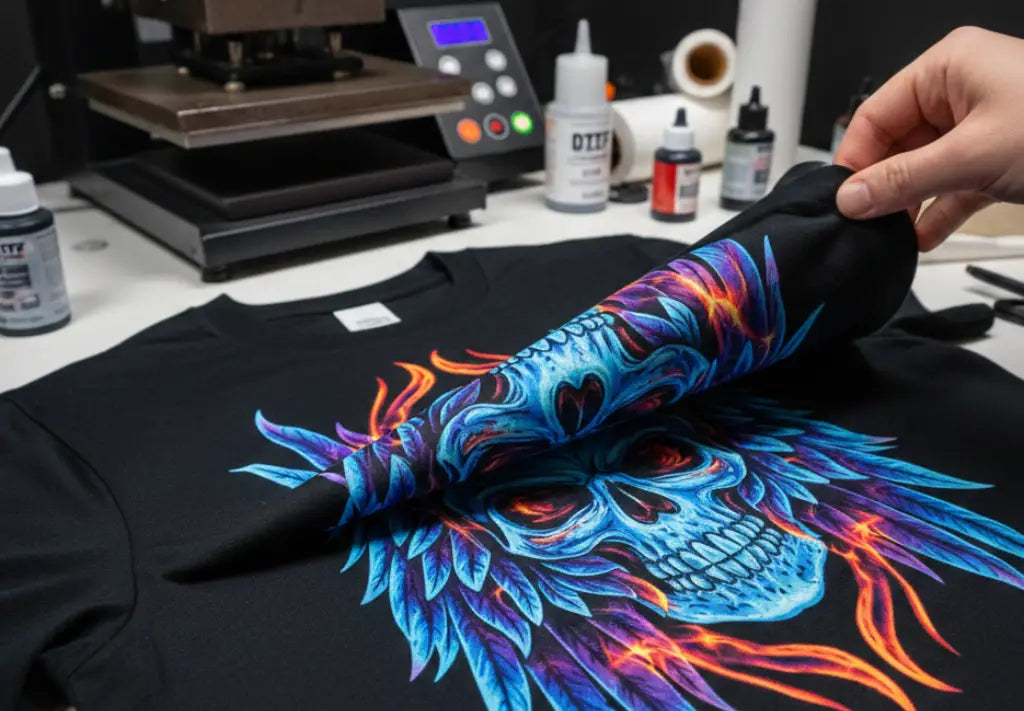
Learning how to fix ghosting in DTF starts with controlling movement. Always allow adhesive to bond fully before peeling, especially on detailed designs.
Applying consistent pressure and avoiding garment repositioning between presses significantly reduces ghosting risk.
Fixing Double Image in DTF Transfers
Fixing double image in DTF requires identifying when movement occurred. Most double images form either during press opening or during premature peeling. Allowing transfers to cool properly before peeling gives adhesive time to stabilize and lock into fabric.
Best Settings to Prevent DTF Ghosting
The best settings to prevent DTF ghosting focus on pressure consistency and timing. Medium to firm pressure works best for most fabrics without causing shifting. Avoid excessive heat that keeps adhesive soft too long, increasing the risk of movement.
DTF Print Alignment Issues and Workflow Mistakes
DTF print alignment issues often happen during rushed production. Skipping alignment checks or pressing uneven garments leads to subtle movement.
Flat surfaces, centered placement, and steady press motions eliminate most alignment related ghosting problems.
DTF Transfer Printing Mistakes That Lead to Ghosting
Many DTF transfer printing mistakes involve impatience. Rushing peel times, stacking hot garments, or moving transfers too early can all cause ghosting. Slowing the process improves accuracy and prevents costly reprints.
DTF Ghosting Troubleshooting Tips That Actually Work
Reliable DTF ghosting troubleshooting tips include taping transfers securely, pressing evenly, and peeling only when adhesive is fully set. Consistent habits outperform advanced equipment when it comes to preventing ghosting issues.
How to Avoid DTF Ghosting Long Term
Knowing how to avoid DTF ghosting long term requires discipline. Repeatable workflows, consistent press settings, and proper garment handling eliminate ghosting almost entirely. Once your process stabilizes, ghosting becomes rare rather than routine.
Conclusion
Ghosting is not a mystery problem, it’s a movement problem. Once you control pressure, alignment, and timing, ghosting stops interrupting your workflow.
For expert supplies, reliable materials, and professional DTF guidance, visit DTF Promo and produce clean, sharp DTF transfers with confidence.
FAQs
1. What causes ghosting in DTF transfers?
Ghosting happens when transfers shift during pressing or peeling, usually caused by uneven pressure, improper timing, or movement while adhesive remains soft.
2. Can heat press movement cause ghosting?
Yes, sudden press opening or fabric lifting can move the transfer slightly, creating a ghost image before the adhesive fully bonds.
3. How do I fix ghosting in DTF prints?
Use heat resistant tape, apply consistent pressure, allow proper cooling, and avoid repositioning garments during or immediately after pressing.
4. Is ghosting related to print quality?
Ghosting is usually a mechanical issue rather than print quality, meaning alignment, pressure, and timing matter more than ink or film quality.
5. Can incorrect peel timing cause ghosting?
Yes, peeling too early allows adhesive movement, which often creates double images or blurred outlines in finished DTF transfers.
6. Do certain fabrics increase ghosting risk?
Stretchy or uneven fabrics can shift under pressure, increasing ghosting risk if not properly flattened and secured before pressing.
7. What pressure level helps prevent ghosting?
Medium to firm pressure works best, ensuring full adhesive bonding without causing fabric or transfer movement during pressing.
8. Can tape prevent DTF ghosting?
Heat resistant tape helps secure transfers, preventing movement and reducing ghosting during pressing and press release.
9. Does ghosting happen more with large designs?
Larger designs are more prone to ghosting because more surface area increases the chance of movement during pressing or peeling.
10. How can I avoid ghosting consistently?
Consistent workflows, correct press settings, secure placement, and patience during peeling help eliminate ghosting in long term DTF production.