
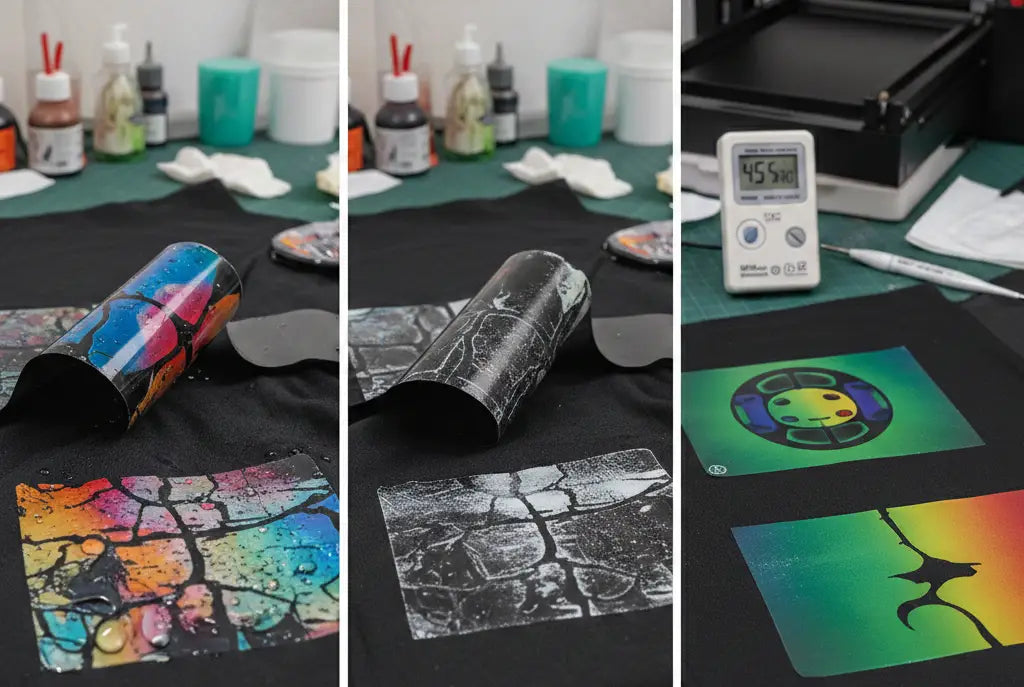
Key Highlights
- Humidity directly affects DTF adhesion and curing
- Stable room temperature improves print consistency
- Heat press fluctuations cause color and bonding issues
- Proper storage prevents film warping and moisture damage
- Environmental control reduces costly DTF reprints
- If your DTF prints sometimes look perfect and other days feel unpredictable, you’re not imagining it. One of the biggest silent factors behind inconsistent results is the environment you print in.
DTF printing temperature settings and humidity levels influence everything, from ink flow and powder curing to film stability and final adhesion. Ignore them, and you’ll fight random failures. Control them, and your results suddenly become repeatable.
This guide explains what’s really happening, why it matters, and how to keep your DTF workflow stable no matter the season.
Why Environment Matters More Than You Think in DTF Printing
Most DTF tutorials focus on ink, film, and presses. But DTF printing environment conditions quietly influence how all those elements behave together.
When temperature or humidity shifts, ink viscosity changes, adhesive powder reacts differently, and films absorb moisture. These changes may be subtle, but they stack up quickly and affect final results.
Understanding Humidity Effects on DTF Printing
The humidity effects on DTF printing are often underestimated. High humidity allows moisture to cling to film and powder, weakening adhesive bonding and causing uneven curing.
Low humidity isn’t harmless either. It increases static, making powder application inconsistent and harder to control during production.
How Temperature Influences the DTF Printing Process
Correct DTF printing temperature settings keep ink stable, powder evenly cured, and transfers flexible after pressing.
When temperatures swing too much, ink may dry too fast or not bond properly, leading to cracking, dull colors, or peeling after washing.
The Role of Temperature and Humidity in Heat Pressing
Temperature and humidity in heat pressing directly affect how adhesive melts and bonds with fabric fibers.
Even with perfect press settings, excess moisture trapped in garments or film can cause bubbling, lifting, or weak adhesion during transfer.
Why Environmental Issues Cause DTF Print Quality Problems
Many DTF print quality issues blamed on ink or film are actually environmental. Smudging, inconsistent color, and poor durability often trace back to moisture or unstable temperatures.
Once environmental factors are controlled, most “mystery” defects disappear.
Finding the Best Temperature for DTF Transfers
The best temperature for DTF transfers depends on adhesive type, film thickness, and fabric, but consistency matters more than chasing exact numbers.
Stable heat ensures adhesive flows evenly and bonds without scorching or under curing.
Moisture Problems in DTF Printing You Should Watch For
Moisture problems in DTF printing often show up as powder clumping, hazy prints, or transfers that peel too easily.
Moisture can enter through humid air, damp garments, or improperly stored film, all preventable with basic controls.
Why DTF Printer Room Temperature Must Stay Consistent
Maintaining proper DTF printer room temperature keeps ink viscosity stable and prevents film expansion or contraction during printing. Frequent temperature swings can cause registration issues, uneven layers, and inconsistent white ink coverage.
How to Control Humidity in Print Shop Spaces
Learning how to control humidity in print shop environments doesn’t require expensive upgrades. Dehumidifiers, sealed storage, and airflow control go a long way. Monitoring humidity daily helps prevent problems before they show up on finished garments.
Heat Press Temperature Fluctuations and Their Impact
Heat press temperature fluctuations cause uneven adhesive melting, leading to partial bonding or premature cracking.
Presses should be regularly calibrated, and heat zones monitored to ensure even pressure and temperature across the platen.
Practical DTF Printing Troubleshooting Tips for Environment Issues
Effective DTF printing troubleshooting tips start with checking room conditions before adjusting printer settings. If results suddenly change without altering materials, environment is almost always the missing piece.
How to Avoid DTF Transfer Warping
To avoid DTF transfer warping, films must stay dry, flat, and stored away from heat sources. Warped film leads to uneven pressure during pressing, causing incomplete adhesion and distorted prints.
Proper Storage Temperature for DTF Films
Maintaining proper storage temperature for DTF films prevents moisture absorption and film distortion. Cool, dry storage ensures films remain stable and ready for consistent application when needed.
Conclusion
DTF printing isn’t just about equipment, it’s about control. Once temperature and humidity are stable, your prints stop surprising you and start behaving consistently.
For dependable DTF supplies, expert guidance, and professional support, visit DTF Promo and take control of your DTF environment with confidence.
FAQs
1. Why does humidity affect DTF printing results?
Humidity introduces moisture into film and powder, weakening adhesive bonding and causing uneven curing during the DTF transfer process.
2. What is the ideal room temperature for DTF printing?
A stable room temperature between normal indoor ranges helps maintain ink consistency and prevents film distortion during printing.
3. Can moisture ruin DTF transfers before pressing?
Yes, moisture absorbed by film or powder can cause weak adhesion, bubbling, and peeling after heat pressing.
4. How do heat press temperature fluctuations affect prints?
Fluctuating heat prevents adhesive from melting evenly, leading to inconsistent bonding and reduced durability after washing.
5. Should garments be pre pressed before DTF application?
Pre pressing removes moisture and wrinkles, creating a dry, flat surface that improves transfer adhesion.
6. How can I control humidity without expensive equipment?
Basic dehumidifiers, sealed film storage, and airflow management effectively control humidity in most print shops.
7. Why do DTF prints behave differently in summer and winter?
Seasonal temperature and humidity changes alter ink behavior, powder curing, and film stability throughout the printing process.
8. Does storage temperature affect unused DTF films?
Improper storage temperatures allow moisture absorption, causing film warping and inconsistent transfer results.
9. Are environmental issues mistaken for material problems?
Yes, many DTF defects blamed on ink or film are actually caused by uncontrolled environmental conditions.
10. What’s the first step when DTF results suddenly change?
Always check room temperature, humidity, and storage conditions before adjusting printer or press settings.