
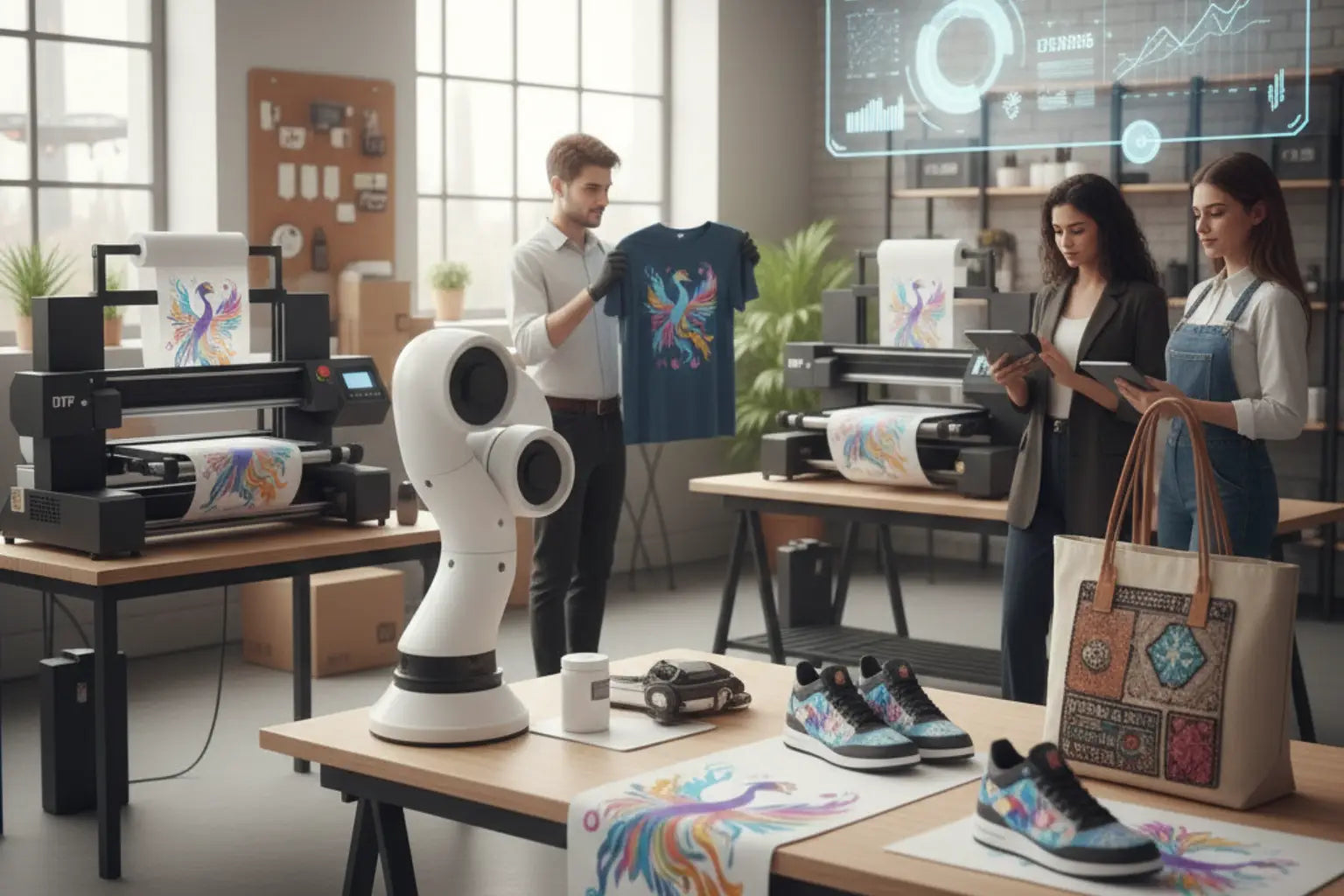
Key Highlights
-
DTF printing trends 2026 emphasize automation, speed, and scalability
-
Sustainable DTF materials are becoming standard across the industry
-
DTF printing technology continues improving print clarity and durability
-
Trending graphics now focus on bold, expressive apparel designs
-
The future of DTF printing supports both small brands and high volume shops
DTF printing isn’t slowing down, if anything, it’s just getting started. Starting off as a casual option for clothing prints, it's now a go to across fashion manufacturing. By 2026, shifts tied to DTF stand out more than ever change isn’t coming, it’s already here.
Efficiency takes center stage in 2026’s DTF printing path, where better workflows meet bolder ideas. Sustainability isn’t an afterthought, it shapes how things get made. Quality gains ground as methods sharpen over time. Those who notice these shifts early find themselves ahead without rushing. Progress hides in choices most overlook.
Automation Is Taking Over Production Floors
One of the most noticeable shifts in the industry is automation. Manual steps that once slowed production are now being handled by smarter machines. Automated DTF printing processes help print shops move faster while reducing human error.
Powder application, curing, and even cutting are becoming more consistent and predictable. This isn’t about replacing people, it’s about helping teams handle growing demand without burning out. Automation directly supports DTF printing market growth, especially for shops handling bulk and repeat orders.
Sustainability Is No Longer a “Nice to Have”
Customers are asking questions. Brands are listening. In 2026, sustainable DTF materials are no longer optional, they’re expected.
Films are getting cleaner, ink choices safer, while less waste flows through print operations. Better Earth outcomes pair well with sharper business edges. In DTF production, green steps shape what comes next apparel buyers notice, then choose accordingly.
Print Quality Is Better Than Ever
Pictures printed with DTF in 2026 come out much clearer compared to earlier versions. Better programs plus new ways to set the ink have made tones deeper while surfaces feel more even. Still, what stands out most is how clean each detail appears now.
Fine details, gradients, and small text now print with confidence. These DTF transfer printing updates make DTF a strong choice even for premium apparel brands that demand flawless results.
Custom Apparel Continues to Fuel Growth
Personalization is still driving sales. DTF printing for custom apparel remains one of the biggest reasons the industry continues expanding.
Creators, influencers, local brands, and online sellers love DTF because it removes barriers. No screens. No minimums. Just freedom to create. This flexibility keeps pushing DTF printing market growth forward year after year.
Design Trends Are Getting Bolder
Minimalism had its moment. In 2026, apparel designs are louder, brighter, and more expressive. Trending graphics for apparel printing include oversized text, vibrant colors, retro inspired visuals, and statement pieces.
These styles translate perfectly onto DTF, making popular designs for DTF transfers more impactful on shelves and online stores. Apparel is no longer background fashion, it’s meant to be noticed.
Speed Matters More Than Ever
Customers want fast delivery, and brands want quick launches. The latest DTF printing technology supports faster workflows without sacrificing quality.
From same day transfer production to quicker heat application, speed has become a competitive advantage. This shift is a major part of the latest DTF printing trends shaping the industry.
DTF Is Now a Core Part of Digital Printing
DTF is no longer considered “alternative.” It plays a major role in digital garment printing trends, standing alongside DTG and screen printing.
The ability to switch designs instantly, handle mixed fabrics, and produce short runs makes DTF essential for modern apparel businesses focused on flexibility.
Smarter Workflows, Fewer Mistakes
Modern DTF setups integrate with design software and order systems. This reduces misprints and wasted materials.
As part of DTF printing trends 2026, smarter workflows help shops scale smoothly while maintaining consistent quality across every order.
Creativity Is Driving Sales
DTF gives designers room to experiment. Layered textures, mixed finishes, and bold color combinations are becoming more common.
This creative freedom strengthens DTF printing for custom apparel, allowing brands to test ideas quickly without heavy investment.
The Industry Is Positioned for Long Term Growth
Everything points toward continued expansion. Shops investing now are preparing for a future built on efficiency, sustainability, and customization.
The future of DTF printing looks stable, scalable, and profitable for businesses willing to adapt.
Conclusion
DTF is no longer just keeping up, it’s leading the way. The DTF printing trends 2026 clearly show an industry focused on smarter production, cleaner materials, and stronger visual impact.
If you’re ready to stay ahead with reliable transfers and forward thinking solutions, explore professional DTF services at DTF Promo and prepare your business for what’s next.
FAQs
1. What are the biggest DTF printing trends for 2026?
DTF printing trends 2026 include automation, sustainable materials, improved print quality, faster production, and bold design styles shaping modern custom apparel printing.
2. Why is automation important in DTF printing?
Automated DTF printing processes reduce production errors, increase speed, lower labor stress, and help print shops handle higher order volumes efficiently.
3. Are sustainable DTF materials becoming standard?
Yes, sustainable DTF materials are increasingly expected as brands and customers prioritize environmentally responsible printing without sacrificing durability or visual quality.
4. How is DTF printing technology improving?
DTF printing technology now offers better color accuracy, smoother finishes, faster curing, and more consistent results across different fabric types.
5. Is the DTF printing market still growing?
DTF printing market growth remains strong due to rising demand for custom apparel, low setup costs, and flexible production capabilities.
6. What design styles work best with DTF transfers?
Popular designs for DTF transfers include bold typography, vibrant graphics, retro themes, gradients, and expressive artwork that stands out on apparel.
7. Why do brands prefer DTF for custom apparel?
DTF printing for custom apparel allows small batches, fast turnaround, consistent quality, and flexibility across fabrics without high production costs.
8. How has DTF print quality improved recently?
DTF print quality improvements come from better inks, refined curing systems, and advanced software that enhances detail and durability.
9. Is DTF part of digital garment printing trends?
Yes, DTF plays a major role in digital garment printing trends by offering fast customization and efficient production for modern apparel brands.
10. What does the future of DTF printing look like?
The future of DTF printing focuses on automation, sustainability, creative freedom, and scalable production for evolving apparel businesses.