
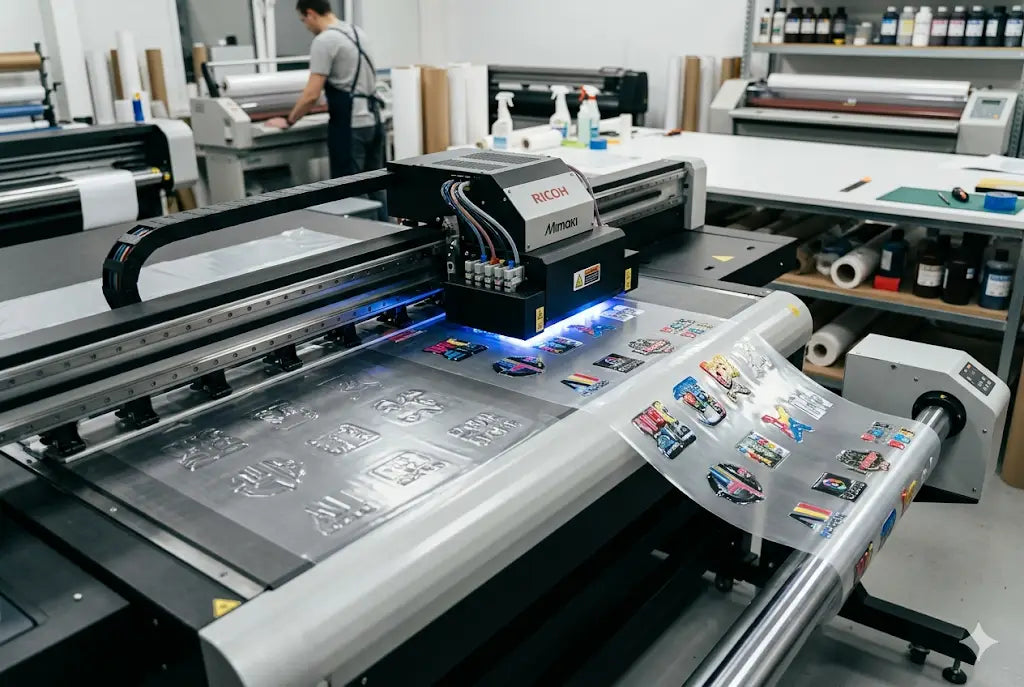
Key Highlights
- The TPU material provides flexible and durable printing capabilities which suit both curved surfaces and applications with intricate texture requirements.
- The UV DTF printing method produces high-quality transfers that do not require direct printing on substrates or heat pressing.
- The combination of TPU material with UV DTF printing technology improves product adhesion and stretch resistance while extending product lifespan.
- Print shops have the ability to create personalized products which include bottles and helmets and soft-touch items.
- TPU results depend on the correct printer settings and curing processes and film handling methods.
Are you a print shop looking to try something different for your UV transfers? The printing industry has a unique technology that uses TPU (Thermoplastic Polyurethane) in 3D UV DTF printing processes. TPU UV DTF printing serves as an essential material as it combines flexibility and elasticity with high wear resistance, which enables its use in situations where conventional rigid inks fail to perform. Print shops can develop durable stretchable transfers through UV DTF printing using TPU to produce visually appealing products for multiple surface types.
TPU is a film or a substrate that can be used with UV curing to create high-durable designs or branding and merchandising. Print shops can use TPU to improve their product quality while gaining access to new markets, which include customized drinkware, automotive accessories, and promotional items. In this blog we will explain how.
What is TPU and Why It Matters in Printing
TPU, which stands for Thermoplastic Polyurethane, is a versatile polymer that exhibits both elastic properties and resistance to wear and long-lasting performance. Textured UV DTF printing, which works differently from standard UV inks, enables print applications to create flexible designs that stick to uneven and curved surfaces without breaking their bond. The material proves essential for designing products that need to flex, including items that people wear, objects with curved designs, and products that face constant user interaction.
TPU provides print shops with a new printing method that delivers both better durability and superior quality results. Traditional UV prints may appear visually appealing but they will break down when people use them repeatedly or under pressure. 3d UV DTF transfers with TPU, on the other hand, maintain their integrity over time. TPU helps you develop new products for markets that require flexible and durable solutions, which helps them build their competitive edge in an oversaturated market.
Understanding 3D UV DTF Printing Technology
The process of 3d UV DTF stickers uses advanced technology to print designs on special transfer film through the application of UV-curable inks. The design undergoes a process of lamination which allows its transfer to the final substrate without using heat pressing equipment. The method produces prints with high resolution and bright colors which create a three-dimensional effect through its slightly raised and textured surface.
The main benefit of UV DTF printing technology is its ability to work with different materials. The technology can be used on various surfaces which include glass, metal, plastic, wood, and ceramics. The technology removes the restrictions that direct printing methods impose because they need either flat surfaces or specially coated surfaces. UV DTF provides print shops with an easier setup process while enabling them to create personalized products that customers desire. The addition of TPU to this process enables prints to achieve both flexible movement and durable strength which makes them appropriate for use on both rigid and semi-flexible products while preserving an upscale appearance.
How TPU Enhances UV DTF Printing Results
The implementation of 3d UV DTF technology creates a major enhancement for the printed transfer performance. The most impressive advantage of TPU shows itself through the material's ability to bend and twist without breaking. TPU allows prints to bend, stretch, and adapt to irregular surfaces without cracking, which is especially useful for curved items like bottles or helmets. The material achieves better adhesion through its flexible properties, which enable better substrate matching.
The second benefit of TPU is extended product lifespan through its resistance to various damages. The TPU-based prints protect against scratches and environmental damage and repeated physical contact. The materials make excellent choices for products which need protection from regular functional damage. TPU improves the print's tactile properties by creating a soft premium texture which consumers link to superior quality.
Using TPU with 3D UV DTF printing helps you deliver trustworthy products, decrease product faults, and enable charging higher prices for products.
Conclusion
TPU integration into UV printing stickers revolutionizes contemporary printing facilities which require materials that provide both strong protection, adaptable performance, and high-quality results. If you are looking to create highly textured or raised logos or branding materials, TPU is the best film you can try with UV DTF printing.
We recommend that you get to know UV DTF with a free sample pack and UV DTF gang sheet before getting started!
FAQs
What is TPU in UV DTF Printing?
TPU, also known as Thermoplastic Polyurethane, refers to a material that is used to make UV DTF prints more durable and flexible. In addition, thanks to this type of material, prints can be stretched to curved and uneven surfaces and do not crack in the process. As for UV DTF printing, TPU is either included into ink or is applied as a flexible coating.
Does any UV DTF printer support TPU?
No, not all UV DTF printers can be used for printing with TPU right away since there are certain requirements regarding the type of ink being used as well as the ability to cure printed layers. Therefore, it would be prudent to consult manufacturers or conduct tests before using this material to avoid damaging equipment or getting inefficient results.
On what surfaces can TPU UV DTF prints be made?
3D DTF printing process can be used to create prints for surfaces like glass, metals, plastic, wood, ceramics and many others. In addition, thanks to its unique features, this material may be applied to curved surfaces which makes prints even more useful since they become more adaptable. In order to get quality results, it is necessary to prepare surfaces first.
Is TPU more costly than conventional UV printing media?
Yes, in comparison to the standard materials used in UV printing, TPU-based ink and film might cost somewhat more. But since the product quality is superior to that of conventional prints, the extra price is justified. Print shops might use the enhanced quality to their advantage by increasing the cost of their goods.
How durable are TPU UV DTF prints?
TPU prints created using DTF technology are extremely durable and have a long life. The print is resistant to scratches, water damage, and harsh conditions, ensuring the longevity of your merchandise. TPU dtf printing is excellent for creating promotional materials and goods such as drinkware and vehicle accessories.
Do TPU prints need particular curing settings?
Yes, since TPU prints may occasionally require unique UV curing techniques, it is vital to make sure they are cured correctly and adequately. If the curing process is carried out inadequately, the print will become susceptible to tearing or separation from the item's surface, lowering its quality.
Is it easy to remove the TPU UV DTF prints?
The TPU UV DTF prints are intended to give you permanent prints. You will not be able to easily remove the prints. They have to work hard to be able to remove them. Therefore, they are best used for long-term purposes than anything else. Careful planning will have to be done to use TPU in a certain design.
Which industries can benefit from TPU UV DTF printing?
Various industries can benefit from the TPU UV DTF printing. Industries such as the promotional product industry, the automotive customization, the consumer goods manufacturing, and the package design industry would greatly benefit from TPU UV DTF printing.
How can print shops begin to work with TPU?
The print shop can begin to work with surface printing technology in various ways. For example, they can do some research about the material and get to know what works best. They need to conduct some tests before adopting TPU fully.
How eco-friendly are TPU UV DTF prints?
It is argued that TPU is environmentally friendlier than other plastics because of its durability and recyclability in specific instances. It is noted that the low amount of waste generated and increased longevity of the print makes UV DTF printing sustainable. Environmental sustainability is dependent on how the product is manufactured and disposed of.