
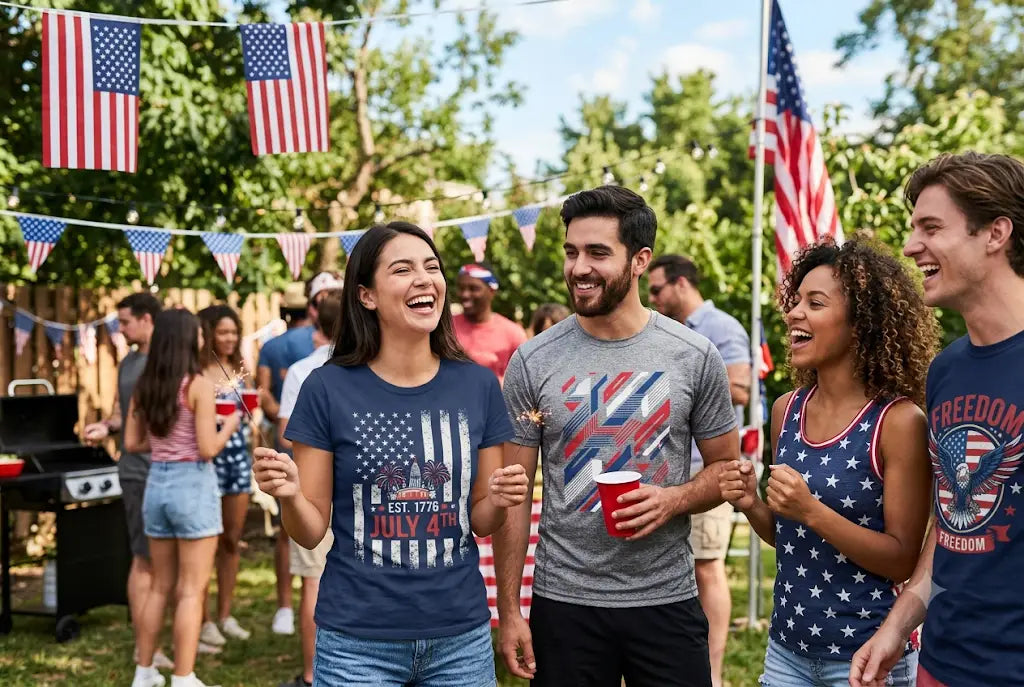
Most shops overcomplicate Independence Day drops. The truth is simple: buyers don’t just want loud graphics, they want shirts they can actually wear again. That balance between visual appeal and comfort is what turns seasonal hype into real margin when working with custom 4th of July shirts.
The demand spikes hard every year between June 10 and July 4, with Google Trends showing a consistent 300%+ surge in searches for patriotic apparel in early summer. Shops that plan production early and control cost per unit can push margins far beyond standard retail apparel.
What Aesthetics Means In Custom 4th of July Shirts
Aesthetics in apparel is the immediate visual impact; how fast the design communicates “Independence Day” without explanation. It’s color harmony, layout balance, and theme clarity.
For 4th of July DTF transfers, this usually means:
- Strong red, white, and blue contrast
- Clean flag elements or typography
- Readable design at 6–10 feet distance
A $12 Etsy shirt rarely sells in detail alone. It sells because it feels seasonally right in under two seconds.
What Functionality Means In Wearable Print Production
Functionality is what happens after purchase. If aesthetics is the hook, functionality is retention.
In Independence Day shirts, functionality includes:
- Breathability in heat (critical for 90°F+ July weather in most US states)
- Soft hand-feel after pressing
- Stretch recovery after wash cycles
- Ink stability under sweat and UV exposure
Cotton-poly blends (60/40 or 65/35) dominate this category because they reduce shrinkage by up to 20% compared to 100% cotton (based on textile testing data from AATCC wash standards).
Shops ignoring this often see return rates climb past 8–12% during peak season.
Why Both Sides Decide Profitability In Seasonal Apparel
Most beginner print shops make one of two mistakes:
- Overdesigning graphics and ignoring wear comfort
- Prioritizing comfort but producing weak visuals
Neither sells at scale.
When balancing patriotic DTF transfers with wearable blanks, conversion rates increase because the buyer sees value beyond a single holiday. Etsy sellers report up to 18–25% higher add-to-cart rates when designs are simple but wearable beyond July 4th.
A shirt that survives repeat wear becomes free advertising after the season ends.
Buy USA-Themed DTF Transfers Today to Build a Collection hat Blends Both functionality and Aesthetics.
Choosing Fabrics And Apparel Types That Sell And Last
Fabric selection directly impacts print quality and profit per unit.
Market pricing snapshot (US wholesale averages 2025):
- Basic cotton tee: $2.80–$4.50
- Mid-tier cotton-poly blend: $4.50–$7.80
- Premium tri-blend: $6.50–$10.50
For 4th of July shirt ideas, the best performers are:
- Ringspun cotton (soft but slightly heavier in heat)
- 60/40 blends (best overall stability for DTF adhesion)
- Lightweight tri-blends for premium boutique buyers
Poly-heavy fabrics above 65% require lower press temps (260–270°F) to prevent dye migration, which increases failed production batches if not monitored.
Cut Waste Before It Cuts Profit
Batching designs on gang sheets through DTF Promo reduces material cost per shirt by up to 40% when compared to single-design sheets, especially during high-volume Independence Day production runs.
Step By Step Process To Produce And Sell Patriotic Shirts
1. Create Design For Market Demand
Focus on bold readability. Thin line flags under 2mm often lose clarity during heat press transfer.
2. Upload Artwork For Gang Sheet Printing
Platforms like DTF Promo allow multiple designs per sheet, lowering per-unit transfer cost to $0.80–$1.50 depending on ink coverage.
3. Optimize Layout For Maximum Sheet Usage
Empty space equals lost margin. Fill every inch of the gang sheet.
4. Production Turnaround
Typical fulfillment is 2–5 business days domestically. Peak June demand may extend to 6–8 days.
5. Heat Press Settings
- Cotton: 300°F for 10–15 seconds
- Blends: 270–280°F
- Pressure: Medium-heavy
6. Peel And Final Press
Cold peel recommended for most PET film systems, followed by a 5–7 second finishing press for durability.
7. Packaging For Retail Value
Simple branded packaging increases perceived value by $2–$5 per shirt without changing production cost.
Production Errors That Destroy Seasonal Profit
Most losses come from avoidable mistakes:
- Overheating film (causes cracking after 2–3 washes)
- Under-curing adhesive powder
- Poor humidity control in storage areas
- Misaligned gang sheet layouts wasting 20–30% material
- Data from small print shops shows nearly 15% of seasonal reprints come from press errors, not design issues.
Scaling Independence Day Apparel Into Repeat Revenue
Seasonal apparel is not just a once-a-year opportunity. Designs used for 4th of July DTF transfers can be adapted for:
- Veterans Day
- Political rallies
- Sports events
- Memorial themed apparel
Shops that build reusable design libraries reduce design costs by up to 60% annually and stabilize production cycles.
Turning Seasonal Demand Into Predictable Profit
The real advantage in Independence Day apparel isn’t creativity alone—it’s execution speed, cost control, and consistency in wearable output. When shops align aesthetics with real-world functionality, they move from random seasonal sales to structured profit cycles.
Using Custom 4th of July DTF transfers as a repeatable production system, not a one-time holiday rush, is what separates low-margin hobby setups from six-figure print operations.
DTF Promo continues to be a production backbone for shops scaling into high-volume patriotic drops because it removes bottlenecks in gang sheet processing and turnaround reliability.
Build Your Next High-Margin Drop
Start planning your next Independence Day collection early and streamline production with DTF Promo. Faster turnaround and tighter cost control mean higher margins before the holiday rush even begins.
Frequently Asked Questions
What makes Custom 4th of July DTF transfers different from traditional printing methods?
They allow full-color prints without screen setup costs. Unlike screen printing, DTF supports short runs, complex gradients, and faster turnaround, making it ideal for seasonal independence day shirts and small-batch Etsy sellers.
How much profit can be made from 4th of July DTF transfers in a small print shop?
Small shops typically earn $6–$18 profit per shirt depending on pricing strategy. A 500-shirt seasonal run can generate $3,000–$9,000 net profit when costs are tightly controlled and bulk gang sheets are used efficiently.
What fabrics work best for independence day shirts?
Cotton-poly blends perform best because they balance comfort and print stability. Pure cotton is soft but shrinks more, while high-poly fabrics risk dye bleed during heat pressing.
How long do patriotic DTF transfers last after washing?
Properly pressed transfers last 40–60 wash cycles. Longevity depends on heat press accuracy, fabric type, and wash conditions, with cold water washing extending print life significantly.
Can beginners start selling custom patriotic shirts without a full print shop?
Yes. Beginners often start with heat press setups and outsourced gang sheets. Startup cost can stay under $1,000 if using third-party suppliers and small batch production.
Why do some 4th of July shirt designs sell better than others?
Simple, bold designs outperform complex artwork. Buyers respond to readability, strong contrast, and emotional patriotic symbolism rather than detailed illustrations.
What is the biggest mistake in DTF shirt production?
Incorrect heat pressing is the biggest issue. Overheating or uneven pressure causes cracking and peeling, which increases returns and reduces repeat customers.
How fast should 4th of July shirt production start before July?
Production should begin at least 3–4 weeks before peak demand. Late June orders often face shipping delays and higher supplier turnaround times due to volume spikes.
What is the average cost per shirt using DTF printing?
Most shops land between $5.50 and $7.50 per shirt including blank, transfer, and labor. Bulk ordering gang sheets significantly reduces per-unit cost.
How does Custom 4th of July DTF transfers help scale seasonal sales?
They reduce setup time, allow multi-design batching, and lower production costs, making it easier to scale quickly during short seasonal demand windows like Independence Day.