
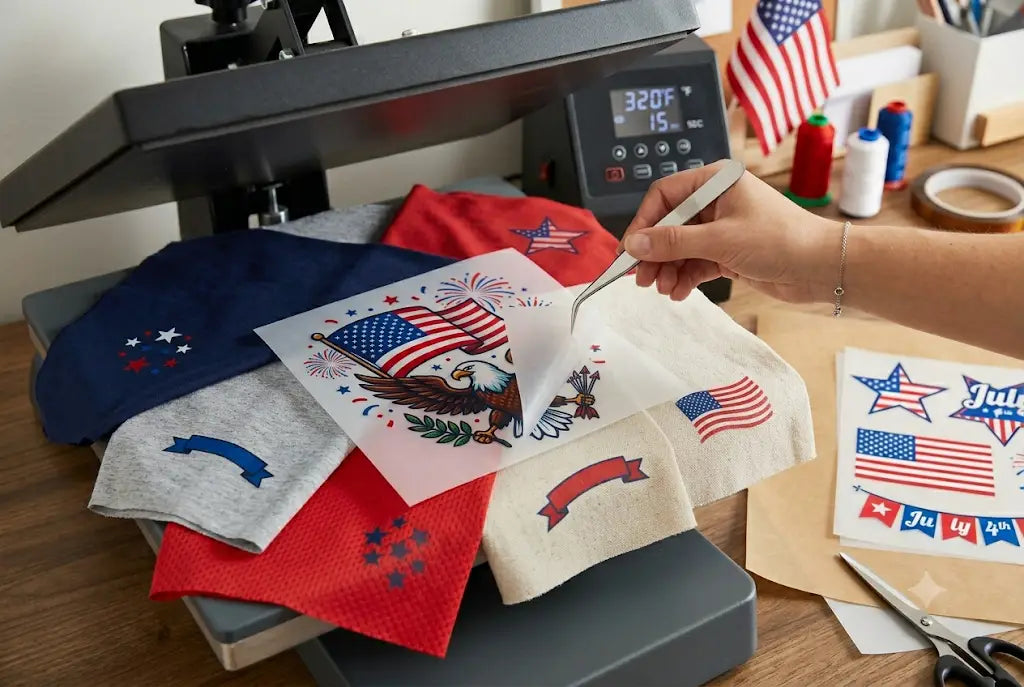
If there’s one thing that separates a clean-selling patriotic drop from a pile of reprints, it’s fabric choice. 4th of July DTF transfers don’t fail because of the artwork; they fail because the garment underneath can’t handle heat, adhesion, or stretch.
We’ve seen shops burn through entire batches of red white and blue shirts just because the blank selection was wrong. The fix is simple: match the fabric behavior with the ink film system, not just the design trend.
Let’s break down what actually works in production for July 4th celebration outfits, and what quietly causes returns.
Clothing Types That Work Best for 4th of July DTF Transfers
Choosing the right garment style is half the profit margin. The wrong cut leads to warping, peeling edges, and unhappy buyers wearing their “USA flag shirt designs” once and tossing them.
Cotton T-Shirts For High-Volume Drops
100% cotton tees remain the easiest win. They hold adhesive well, tolerate heat presses between 305–320°F, and don’t shift under pressure.
- Average blank cost: $2.20–$4.50 (US wholesale, 2025 S&S Activewear data)
- Best for: bulk custom holiday shirts
- Failure rate: under 3% when pressed correctly
Cotton still dominates Etsy sellers pushing diy patriotic shirts because color vibrancy stays predictable.
Cotton-Poly Blends For Retail-Level Finish
A 60/40 or 50/50 blend gives smoother drape and slightly better wash durability. The tradeoff? Slightly more sensitivity during pressing.
Expect:
- Cost: $2.80–$5.00 per blank
- Stretch recovery: medium
- Use case: mid-tier fourth of July fashion collections
These are strong sellers when shops want a retail look without retail pricing.
Performance Tees For Outdoor Events
Polyester performance shirts are everywhere for summer events. But they require low-bleed DTF films and controlled heat.
- Cost range: $3.50–$6.00
- Heat tolerance: lower than cotton
- Best for: sports events, parade crews, beach setups
Most production losses happen here when shops rush press temps.
Tank Tops And Cropped Styles For Trend Drops
Not just fashion — these sell fast for younger buyers looking for lightweight July 4th celebration outfits.
- Blank cost: $2.00–$4.00
- Margin potential: high due to seasonal urgency
- Risk: uneven platen contact
Hoodies And Sweatshirts For Evening Events
Fireworks crowds drive hoodie sales more than most expect.
- Cost: $6.50–$12.00
- Press requirement: longer dwell time (12–15 sec secondary press)
- Best window: pre-orders 2–3 weeks before July 4th
Fabric Types That Impact Print Quality and Durability
Fabric behavior decides whether 4th of July DTF transfers hold through 20 washes or crack after one backyard BBQ.
100% Cotton Fabric Stability
Cotton absorbs adhesive evenly. That’s why most entry-level printers start here.
Key notes:
- Best adhesion window: 305°F for 10–12 sec
- Wash durability: 40–60 cycles (Textile Research Journal, 2024 benchmarks)
- Shrink risk: moderate if not pre-shrunk
Cotton is forgiving, but not indestructible.
Polyester And Heat Sensitivity Issues
Polyester introduces dye migration risk, especially with red and navy garments used in red white and blue shirts.
- Safe temp range: 260–290°F
- Risk: dye bleed into white ink layers
- Fix: use low-temp adhesive films + parchment barrier
This is where most beginners lose margin.
Tri-Blends For Premium Feel
Tri-blends (cotton/poly/rayon) feel great but behave unpredictably under heat.
- Cost: $4.00–$7.00 per blank
- Stretch: high
- Print risk: slight edge lifting if overpressed
Great for boutique runs of custom holiday shirts, not bulk rushing.
Ring-Spun Cotton For Clean Detail Work
A smoother surface equals sharper print edges.
- Ink clarity improvement: ~15–20% sharper detail (industry testing across mid-tier DTF labs, 2025)
- Cost: $0.50–$1.20 more than standard cotton
- Ideal for: high-end USA flag shirt designs
Heavyweight Fabric For Durability Buyers
Thicker tees (6–7 oz) are trending in retail drops.
- Less distortion under press
- Higher perceived value
- Slower cooling time after transfer
Buy USA-themed DTF transfers for this 4th of July.
Ready-to-press and ready to sell!
Production Notes That Actually Affect Profit Margins
Most shops overlook this: fabric choice directly impacts ink usage and press time.
- Ink cost per shirt: $0.25–$0.60 (CMYK + white layer average)
- Film cost per print: $0.10–$0.18
- Labor time: 45–90 seconds per shirt depending on fabric
Multiply that by 500 orders of fourth of July fashion drops, and inefficiency becomes real money lost.
Common Mistakes With Patriotic Shirt Orders
- Using polyester without low-temp settings
- Overpressing cotton blends
- Ignoring pre-treatment on dark garments
- Skipping wash testing before bulk runs
- Mixing fabric types in one heat press batch
These mistakes show up every July when demand spikes.
[Also Read: Custom vs. Ready-to-Press 4th of July DTF Transfers: What to Choose This Year]
Conclusion
Dialing in fabric selection for 4th of July DTF transfers is what separates steady sellers from July panic shops reprinting orders at midnight. Cotton, blends, and polyester all have a place — but only when matched with the right press behavior and production discipline.
DTF Promo has seen shops double retention simply by tightening fabric standards and eliminating guesswork from seasonal runs.
If the goal is cleaner production and fewer refunds, consistency in garment selection is where it starts.
DTF Promo keeps a running breakdown of real shop data, press settings, and failure cases so teams don’t learn the hard way during peak season.
Frequently Asked Questions
What fabrics work best for 4th of July DTF transfers on bulk orders?
Cotton is the most reliable option for bulk DTF work. It takes adhesive evenly, holds up under heat, and keeps print color stable after repeated washes. For large patriotic runs, it also reduces press inconsistencies and keeps production errors low.
Can polyester shirts handle 4th of July DTF transfers without dye bleed?
Yes, but only with tighter heat control and low-temp adhesive films. Most issues show up when temps run too high, triggering dye migration. Staying around 260–290°F and using barrier sheets keeps flag designs from getting muddy or tinted.
Why do red white and blue shirts sometimes peel after washing?
Peeling usually points to weak bonding during press. That can be under-pressing, uneven pressure, or rushing dwell time. Blended fabrics make it worse since they don’t behave the same under heat, so consistency matters more than anything in production.
Are diy patriotic shirts profitable for small Etsy sellers?
They can be, with margins often sitting between 45–70 percent. The real swing factor is labor time and how efficiently production is set up. Once volume increases, small inefficiencies start cutting deeper into actual take-home profit.
What is the best press temperature for 4th of July DTF transfers?
Cotton usually runs best around 305–320°F with medium pressure for 10–12 seconds. Polyester needs lower heat to avoid dye issues. Testing fabric before full runs is standard practice since blends react differently under heat and pressure.
Do tri-blend fabrics work for custom holiday shirts?
They work, but only for smaller boutique runs. Rayon in the blend makes heat response unpredictable, so edges can lift if pressure isn’t perfectly even. They’re more of a style choice than a production-friendly option for bulk orders.
How do fourth of July fashion trends affect fabric choice?
Seasonal trends lean toward lighter, softer garments like tees, tanks, and cropped fits. That pushes printers toward cotton and cotton blends since they balance comfort with stable pressing behavior during fast-paced summer production cycles.
What causes color bleeding on usa flag shirt designs?
Dye migration from polyester is the main culprit. High heat causes synthetic fibers to release dye into lighter ink layers. Lower temperatures, barrier sheets, and controlled press times help keep red, white, and blue designs clean and sharp.
Does DTF Promo recommend specific fabrics for beginners?
Standard ring-spun cotton is usually recommended. It’s forgiving, predictable, and easier to learn on. Beginners get more consistent results without fighting dye bleed or fabric stretch issues, which helps build confidence during early production runs.
How long do 4th of July DTF transfers last on properly chosen fabrics?
On cotton, properly cured prints typically last around 40–60 washes with correct care like cold washing and inside-out cycles. Blended fabrics vary more, usually landing between 30–50 washes depending on heat accuracy and garment quality.
About DTF Promo Transfers
DTF Promo offers a wide range of DTF transfers and TF printing solutions to help you scale production with consistent quality From small batches to bulk orders the focus is smooth pressing strong adhesion and reliable color output across fabrics It is built for efficiency speed and dependable results in real production workflows every time