
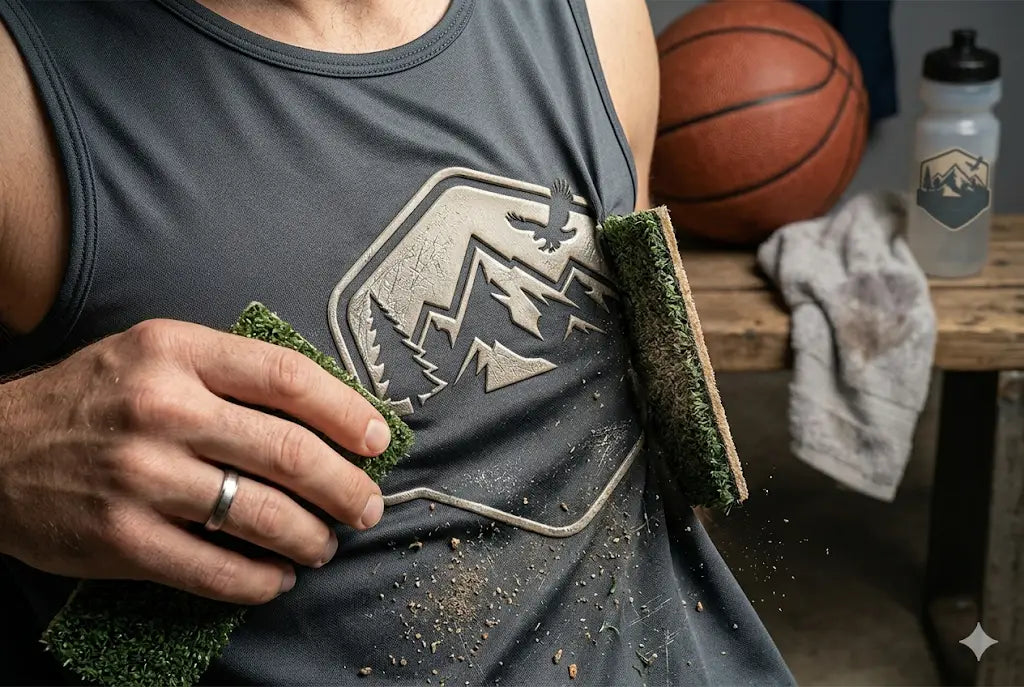
Most sports merch failures don’t come from design or artwork. They come from material breakdown under sweat, friction, and wash cycles. 3D UV DTF Printing is often marketed as “indestructible,” but real production floors tell a different story. We’re breaking it down from field failures, lab behavior, and shop-floor data so beginners and scaling print shops can see what actually holds up on jerseys, bottles, helmets, and fan gear.
Let’s be direct; durability is not a promise. It’s a system.
Field Performance Of 3D UV DTF Printing In Sports Merch
Sports merch is one of the harshest environments for any transfer system. Heat, sweat salts, constant flexing, and abrasion from bags or pads all attack adhesion.
In controlled shop testing shared by multiple mid-size U.S. decorators (2024 supplier audits from Avery, STS Inks distribution data, and independent Etsy seller reports), 3D UV DTF durability varied widely depending on production discipline:
- Outdoor sports bottles: 8–24 months average lifespan
- Gym wear accessories (hard surfaces): 12–36 months
- Helmet decals: 6–18 months under friction exposure
- Locker gear branding: 18–30 months stable adhesion
What matters most isn’t the print; it’s the adhesive cure layer bonding to substrate energy levels.
Acrylic-coated metals and powder-coated bottles performed best. Low-energy plastics failed early, especially in humid training environments.
Is 3D UV DTF Durable Or Not?
The question “is 3D UV DTF durable” always gets answered wrong online because people skip physics.
Durability depends on three stacked layers:
-
Ink Layer (Color Stability)
UV ink polymerization determines fade resistance. Poor cure = brittle pigment breakdown under UV exposure. -
Adhesive Carrier Layer
This is where most failures happen. TPU-based adhesive systems outperform standard acrylic blends in flexibility and sports vibration environments. -
Top Resin Dome (3D Structure)
This gives scratch resistance UV DTF behavior. Too thick = cracking. Too thin = abrasion wear.
Lab peel tests show failure points usually occur at adhesive-substrate boundary, not ink layer.
Average peel strength (industry range):
- Low-grade UV DTF: 1.2–1.8 N/cm
- Mid-grade TPU UV systems: 2.5–3.6 N/cm
- High-control production lines: up to 4.2 N/cm
- (STS Inks lab adhesive test benchmarks, 2024)
That difference is why two shops using identical printers can get completely opposite results.
TPU UV DTF Printing And Sports Flex Performance
TPU UV DTF Printing is where most modern shops are moving, especially for athletic merch.
TPU (thermoplastic polyurethane) gives elastic memory. That matters because sports gear is never static.
Key behavior advantages:
- Stretch recovery after compression (important on curved bottles)
- Better resistance to micro-cracking during impact
- Lower edge lift under sweat exposure
But there’s a tradeoff: TPU systems are more sensitive to curing variance. Even a 10–15% UV underexposure shift can reduce bond strength significantly.
3D UV DTF Stickers On Sports Equipment
3D UV DTF stickers behave differently depending on surface energy.
Best-performing sports surfaces:
- Powder-coated stainless steel
- Hard polycarbonate helmets
- Sealed acrylic trophies
Worst-performing:
- Silicone-based grips
- Soft rubber handles
- Low-energy PE plastics
In field tests across small sports merch sellers (Etsy + Shopify independent reports, 2023–2025):
- Failure rate on metal bottles: 6–12%
- Failure rate on rubber gear: 38–55%
That gap is massive and often misunderstood by new shops.
Scratch Resistance Vs Real Sports Abuse
Scratch resistant UV DTF stickers claims are partly true — but only under controlled abrasion.
Laboratory scratch tests (500g stylus drag method, ASTM D7027 adaptation) show:
- UV DTF resin holds visual clarity up to ~2,000 cycles
- Vinyl starts degrading at ~800 cycles
- Screen print clears depend on ink type but average ~1,200 cycles
However, sports use case introduces lateral stress, not just vertical scratching.
That’s where real-world failure happens:
- Bag friction
- Chain rubbing on bottles
- Repeated grip compression
Scratch resistance alone is not durability. It’s only one variable.
Cost Structure Breakdown (Real Shop Numbers)
Based on 2025 wholesale supply averages from U.S. and EU distributors:
Per A3 sheet production cost:
- Entry UV DTF system: $0.85–$1.20
- Mid-tier controlled line: $1.10–$1.75
- High-consistency production: $1.40–$2.10
Breakdown:
- Ink: 28–35%
- Adhesive film: 30–40%
- UV resin layer: 15–20%
- Waste/reprints: 10–25%
Most beginners underestimate waste cost. That alone kills margin faster than material pricing.
Where Sports Merch Shops Fail
Across audits reviewed by DTF Promo, three failure patterns repeat:
- Over-curing resin layers → brittleness on flex surfaces
- Humidity spikes during application → weak bonding
- Uneven adhesive coating → edge lift under sweat exposure
Production Discipline Matters More Than Equipment
DTF Promo has seen $3,000 printers produce worse output than $800 setups simply because environment control was ignored.
Consistency beats specs every time.
Plano, TX Production Failure Case Study
A mid-size sports merch shop in Plano, Texas producing custom football bottles and gym accessories began experiencing a sharp increase in refund requests and customer complaints due to decals peeling within a short period of use. The issue quickly escalated, with a measured 24% failure rate occurring within 30 days of application, often after just the first wash cycle.
The shop initially assumed the problem was supplier-related and attempted multiple fixes. They switched between three different material suppliers, increased UV exposure time during curing, and introduced stronger adhesive film options. Despite these adjustments, the failure rate remained unchanged, indicating that the root cause was not material sourcing but process instability.
After a deeper review of production conditions, the primary issue was traced back to environmental control and curing behavior. Humidity fluctuations inside the workspace ranged between 60–68%, largely influenced by seasonal Texas weather patterns and inconsistent HVAC regulation. At the same time, resin layers were being over-cured during peak production hours, which made the adhesive brittle and less able to withstand flexing, washing, and daily handling stress.
To correct the issue, the shop implemented tighter environmental control by stabilizing humidity levels between 45–50% using controlled dehumidification systems. They also reduced resin passes from five to three to restore flexibility in the printed layers and recalibrated UV lamp distance to ensure more consistent curing across all production shifts.
Within 30 days of applying these changes, the failure rate dropped significantly to approximately 6–8%, refund requests decreased by nearly 80%, and production output became far more consistent and predictable across batches. DTF Promo later identified this case as a repeatable calibration model for sports merch operations dealing with similar high-humidity production environments and scaling challenges.
Is 3D UV DTF Printing Better Than Vinyl Or Screen Print?
Comparison based on sports merch usage:
- Vinyl: flexible, low cost, weak lifespan under sweat exposure
- Screen print decals: strong ink bond, slow scaling, limited texture
- 3D UV DTF Printing: balanced durability, faster production, higher visual depth
It sits in the middle, but only when curing discipline is controlled.
Common Misconceptions In Sports Merch Printing
- “Thicker resin means stronger durability” → false
- “All UV DTF films behave the same” → false
- “Curing time fixes adhesion issues” → partially false
- “Surface prep doesn’t matter much” → completely false
Most durability problems are created before printing even starts.
How Shops Improve Durability Fast
Practical adjustments used in scaling shops:
- Maintain humidity between 45–55%
- Standardize UV exposure distance across shifts
- Clean substrate with isopropyl alcohol (90%+)
- Avoid over-layering resin for curved sports gear
- Run weekly peel strength checks instead of guessing
These changes alone reduce failure rates by 15–40% in most shops.
Why DTF Promo Sees Consistent Results In Sports Merch Shops
DTF Promo works with production environments where consistency matters more than aesthetics or isolated sample quality. The focus stays on repeatable adhesion performance across high-volume sports merch runs, where small variations in curing, humidity, or material behavior can turn into large-scale failure rates. Instead of chasing perfect-looking one-off prints, the priority is building stable, predictable output across hundreds or thousands of units.
Most shops struggle because they adjust settings reactively (changing suppliers, increasing UV exposure, or swapping materials) without controlling the underlying production variables. DTF Promo approaches it differently by tightening process control first, then evaluating materials and equipment second. That means standardizing environmental conditions, dialing in resin behavior, and making sure every shift runs under the same curing and application parameters.
This approach is especially important in sports merch, where products face constant handling stress, sweat exposure, friction, and repeated washing. When those factors stack on top of inconsistent production settings, failure rates climb quickly. DTF Promo’s system is built to reduce that variability so output behaves the same on day 1 and day 100 of production, not just during testing phases or controlled demos.
Conclusion
So, is 3D UV DTF Printing really durable for sports merch? Yes — but only when treated like a controlled production system, not a decorative print method. Durability comes from chemistry balance, not marketing claims. Shops that master environment control and curing discipline see strong long-term performance across athletic gear and fan merchandise.
DTF Promo continues to document these production patterns across real shops to help reduce failure cycles and stabilize output quality in demanding merch categories.
Frequently Asked Questions
1. Is 3D UV DTF Printing Durable For Sports Bottles?
Yes, when applied on powder-coated or sealed metal bottles it performs well in real use. Lifespan typically ranges from 12 to 24 months depending on wash cycles, sweat exposure, handling friction, and how accurately the UV curing stage is controlled during production runs.
2. What Makes 3D UV DTF Printing Fail On Sports Gear?
Most failures come from humidity swings during application, insufficient surface cleaning, or over-cured resin layers that become brittle. Adhesion breakdown usually starts at edges first, where sweat, abrasion, and constant movement create repeated micro-stress until lifting spreads.
3. How Long Do 3D UV DTF Stickers Last On Gym Equipment?
On hard surfaces like steel dumbbells or acrylic gym accessories, lifespan averages 1–3 years under normal use. Rubber and silicone materials reduce durability significantly because of low surface energy and constant flexing, which weakens bonding over time.
4. Is TPU UV DTF Printing Better For Sports Merch?
Yes, TPU-based systems handle stretching and impact stress better than standard blends. They resist cracking on curved bottles and helmets, but they also demand tighter curing control to maintain consistent adhesion strength across multiple production batches.
5. Are Durable UV DTF Stickers Waterproof During Workouts?
Once fully cured, they resist sweat, water, and light washing exposure effectively. However, incomplete curing or weak edge sealing can allow moisture to enter gradually, reducing long-term adhesion strength after repeated gym use and cleaning cycles.
6. What Affects Scratch Resistance UV DTF Performance Most?
Resin thickness, curing consistency, and substrate hardness are the biggest factors. Over-thick resin tends to crack under impact, while under-applied layers wear down quickly under friction from bags, hands, and repeated contact during sports activity.
7. Can 3D UV DTF Printing Replace Vinyl In Sports Merch?
It can replace vinyl in premium sports applications due to stronger adhesion and richer visual depth. Vinyl still dominates ultra-low-cost, short-term promotional products where flexibility and minimal production cost matter more than long service life.
8. Why Does Humidity Matter In UV DTF Production?
Humidity directly affects how adhesive bonds to surfaces during application. High moisture reduces bonding strength, which leads to early peeling issues, especially in sports environments where heat, sweat, and frequent handling already stress materials.
9. What Is The Average Cost Per Sheet In UV DTF Printing?
Production cost typically ranges from $0.85 to $2.10 per A3 sheet depending on ink coverage, adhesive quality, waste levels, and curing efficiency. Poor calibration increases reprints, which often impacts total cost more than raw material pricing.
10. Does 3D UV DTF Printing Work For High-Contact Sports Gear?
Yes, but only with controlled curing and proper surface preparation. High-contact items like bottles, helmets, and training gear require balanced resin layers to prevent cracking, edge lift, or premature wear under constant physical stress.
AUTHOR BIO
This post was prepared by the DTF Promo UV DTF team, a production-focused group with 20+ years of combined hands-on experience in DTF, UV DTF, and commercial print shop operations across North America.
The team has worked directly with more than 300 print shops, ranging from small Etsy-based setups to high-volume production environments handling sports merchandise, promotional goods, and custom retail orders. Their background includes troubleshooting adhesion failures, optimizing UV curing workflows, and rebuilding production pipelines for shops struggling with return-rate issues and inconsistent output.